by Hans Ngala
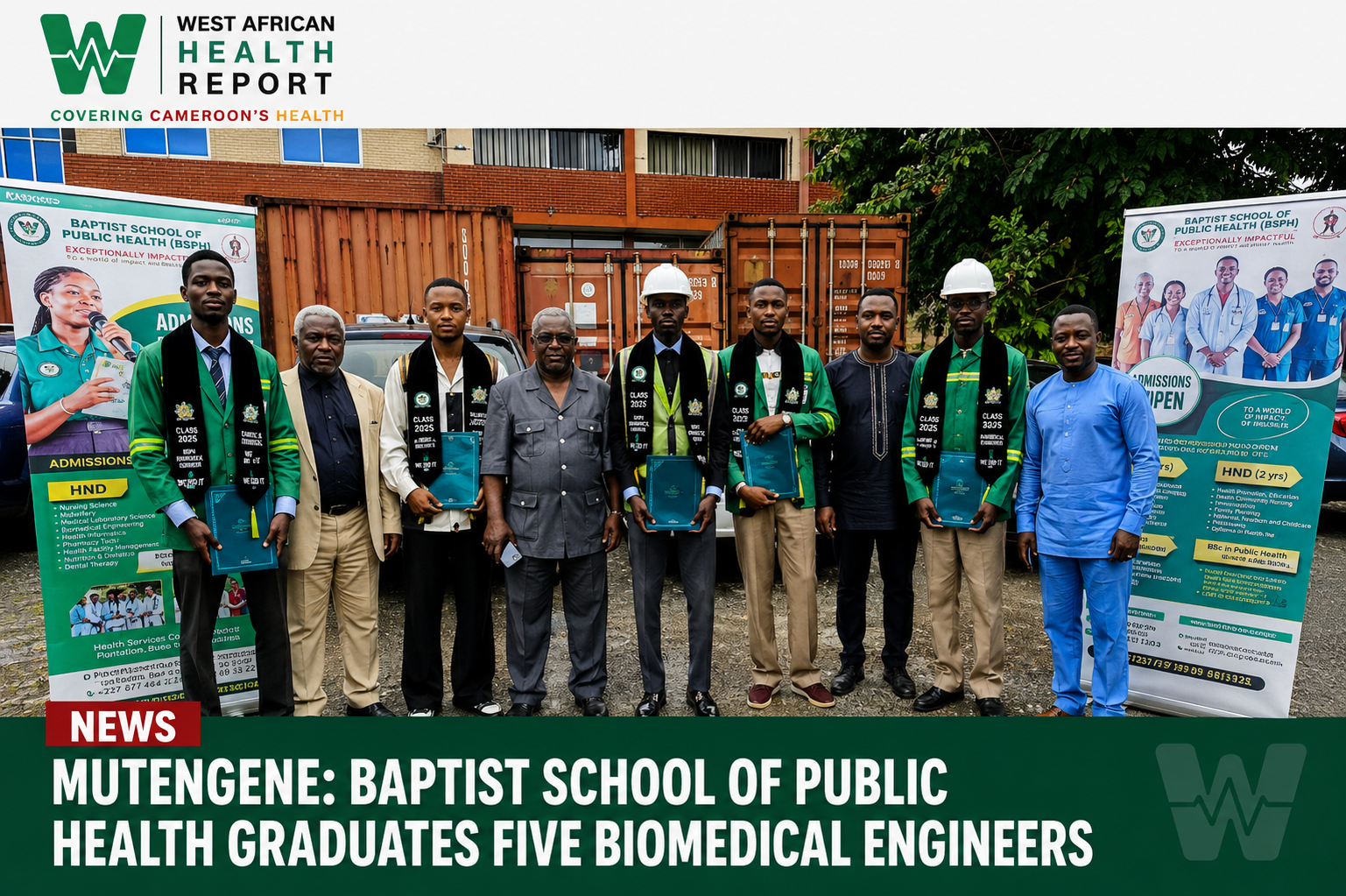
A cohort of Biomedical Engineering students has graduated from the Baptist School of Public Health in Mutengene, South West Region.
The cohort consisted of five graduates whose final-year projects focused on innovative, low-cost technologies designed to address some of Cameroon’s most pressing healthcare challenges, including neonatal care, disability support, stroke rehabilitation, vital sign monitoring, and mental health.
The graduates successfully defended their research projects after four years of academic training at the School of Public Health of the Cameroon Baptist University Institute (CBUI), demonstrating the growing role of biomedical engineering in improving healthcare delivery through locally developed solutions.
The projects presented included:
· Ngaha Glen Mue: Rehabilitation and Intelligent Upgrade of Faulty Incubators Using Remote Monitoring and Predictive Maintenance, a project aimed at extending the lifespan of malfunctioning neonatal incubators while improving their reliability through smart monitoring systems.
· Ngala Divine Budzi: Design and Development of a Voice-Controlled and Joystick Smart Wheelchair for Physically Disabled Individuals, an innovation intended to improve mobility and independence for people living with physical disabilities.
· Nformi Ivan Afanyu: Design and Development of a Portable Arduino-Based Vital Sign Monitoring Kit in Healthcare, a portable device designed to facilitate real-time monitoring of patients' vital signs in both hospital and community settings.
· Attia Ndze Dwight: Design and Realization of a Smart, Low-Cost Rehabilitation Device for Patients with Partial Stroke Paralysis, a rehabilitation system developed to support stroke recovery using affordable technology.
· Kwande Brayan Tarla: Development and Realization of a Wearable Stress Detection Device for Real-Time Physiological Monitoring, a wearable solution capable of monitoring physiological indicators associated with stress to promote early intervention.
The project defense was assessed by an academic jury chaired by Prof. Yenke, with Dr. Abeti Emmanuel serving as examiner and Eng. Bafon Terence as rapporteur.
The projects underscored the potential of biomedical engineering to develop practical, affordable healthcare technologies tailored to local needs. The innovations also highlighted the growing capacity of young Cameroonian engineers to contribute solutions that can strengthen the country's healthcare system and improve patient outcomes.